
National Youth Peer Support Specialist & Supervisor Certification and Accreditation
Peer Connect:
The First & Only National Youth Peer Support Workforce Certification Training & Accreditation Program!
Creating conditions where youth leadership and advocacy, shared lived experience, and authentic partnership can thrive within (and beyond!) youth-serving systems. Our work ensures that peer support is a formalized, billable service and the movement is led by youth, for youth.
Click a link below to jump straight into a specific section:

We believe that transparency matters. When we describe Peer Connect as a national accreditation model, we mean that we have built a national training foundation and a state-specific process to help youth peer professionals navigate the distinct accreditation requirements of the states in which they seek to work. Where a state’s pathway differs, we are clear about it; we help participants understand their options, and we continue working to expand access over time. Here is what the process looks like:
How Our Accreditation Model Works
Youth MOVE National’s (YMN) Peer Connect: Youth Peer Support National Accreditation Model is designed to give youth peer professionals a clear, supported pathway from completing an evidence-based, high-quality national training experience to meeting the specific accreditation requirements of the state in which they intend to work.
At the foundation of the model is our national 40-hour Peer Connect Youth Peer Support training curriculum, offered through an accessible, pay-per-seat cohort model. This core curriculum reflects commonalities across state standards and is grounded in national best practices advanced through years of field leadership, research, and collaboration, including work with the U.S. Department of Health and Human Services.
Our model is designed to account for the meaningful differences that exist across state accreditation systems. Our approach combines a strong, consistent national training foundation with a detailed process for understanding and addressing state-specific requirements.
When a young adult participant enrolls, we identify the state in which they are seeking accreditation and conduct a detailed crosswalk between that state’s current requirements and the Peer Connect curriculum. YMN maintains an extensive, internally developed system that tracks state-specific requirements, allowing us to determine where adjustments may be needed, including additional training hours, required content, specific modules, or other state-mandated elements such as professional development or continuing education. We then work with the participant to ensure that their training pathway addresses the requirements applicable to their state.
In some states, accreditation may be limited to designated or exclusive training partners, with no alternative pathway currently available. In those circumstances, we are transparent with participants about the limitation, identify the appropriate state-designated training partners, and help connect participants to relevant resources. Participants may still choose to complete Peer Connect training, while YMN continues working directly toward recognition as an approved training partner in those states. The timeline and outcome of that process ultimately rest with the state.
Importantly, this work begins well before an individual participant encounters a barrier. We are proactively working with states that have such restrictions, identifying gaps and pursuing pathways toward broader recognition to reduce barriers for future participants.
Our support also continues after training is complete. We work alongside participants as they navigate the state-specific accreditation process, helping them document their training and demonstrate that applicable requirements have been met.
The strength of our Peer Connect National Accreditation Model comes from the voices of youth and young adults with lived and living experience that shaped the design, decades of extensive research, ongoing monitoring of changing requirements, curriculum alignment, relationship-building with states, persistence in addressing barriers, rigorous quality improvement mechanisms, and individualized support throughout the accreditation process.

Section 1: Role Definitions & Program Intro
Youth MOVE (Motivating Others through Voices of Experience) National’s (YMN) Peer Connect training program is the first and only comprehensive national peer support certification, accreditation, workforce development, and implementation model designed specifically for youth and young adults all across the country. This validated, peer-reviewed, and evidence-based framework is built from decades of youth-informed practice, national workforce development, and systems change experience. It was co-designed by and for systems-impacted youth in collaboration with multidisciplinary experts, including clinicians, doctors, social workers, researchers, state health departments, community care behavior health organizations, universities, and more, while integrating other evidence-based scientific models through implementation science. The Peer Connect training program serves as both a rigorous certification pathway and a comprehensive implementation support framework. Through training, accreditation, implementation support, and technical assistance, YMN partners with state behavioral health systems, youth-serving agencies, and community organizations to co-create the specific organizational conditions necessary for youth peer support programs to succeed as a sustainable and essential workforce pathway.

Section 2: Purpose & Value of National Accreditation
Why Peer Connect?
At Youth MOVE National, we explicitly honor and align ourselves with the grassroots history and ongoing advocacy of the Consumer/Survivor/Ex-Patient (CSX) “Peer” Movement. We recognize that peer support was born out of collective resistance to harmful systems and conventional approaches to ‘care’ and ‘support.’
We deeply respect the historical and ongoing caution within the grassroots community regarding the formalization of this workforce. We also recognize the stark reality that youth and young adults are increasingly being hired into paid peer roles without proper readiness or supervision to involve them meaningfully and in the most trauma-informed way possible.
Youth peer support has grown because youth and young adults have spent decades showing what is possible when lived experience is recognized as a source of meaningful expertise, connection, and leadership. Today, that work is gaining momentum across the country as more funders, organizations, communities, and state systems invest in youth peer support as part of a broader workforce ecosystem to strengthen behavioral health and other youth-serving systems. As the field continues to grow, so does the need to protect the integrity of the role.
National accreditation helps create that framework and consistency while honoring the flexibility needed for communities to develop programs that reflect their own needs, priorities, and cultural context. It recognizes that beyond individual training, strong programs are built through thoughtful implementation consisting of organizational readiness, prepared supervisors, ongoing learning opportunities, and a clear understanding of the unique role youth peer support specialists play within multidisciplinary teams.
What Makes Our Program Different
Peer Connect offers a model that helps organizations build a strong foundation before, during, and long after implementation begins, creating a common point of reference and a consistent fidelity model as this workforce continues to expand.
Our national model includes:
Certification & Training
- National Youth Peer Support Specialist Certification
- National Youth Peer Support Supervisor Certification
- Train-the-Trainer Certification – Youth Peer Specialist & Supervisor
- Continued learning, networking, and professional development opportunities
Readiness & Accreditation
- Organizational readiness assessment and implementation planning
- Organizational and statewide accreditation pathways
- Curriculum consultation, policy alignment, and state adaptation support
Continuous Quality Improvement (CQI), Sustainability & Technical Assistance
- Technical assistance and implementation coaching
- Fidelity monitoring and continuous quality improvement
- Legacy implementation partnerships for long-term sustainability

Peer Connect reflects decades of Youth MOVE National’s trusted partnerships with youth, communities, states, federal entities, and national leaders.
What truly defines our approach is how we weave these core elements together:
Co-designed by Youth, Backed by Evidence
Advising the White House
Driving Congressional Policy
Leading National Technical Assistance
Transforming Youth-Serving Systems
Shaping National Standards
Guiding the 988 Suicide & Crisis Lifeline
Equipping Federal & State Grantees
Workforce Development at Scale
Federal Expertise with Local, Place-Based, Community Knowledge
Section 3: Theories, Research, Models, Themes & Citations
Program Development History
In 1999, youth from various states gathered at a national peer movement conference in Washington, D.C. These early interactions and the bonds formed centered on peer support led the group to present at a national System of Care/Children’s Mental Health Initiative summit in 2001, marking their emergence as a significant voice within the youth peer movement. The group's growing influence was recognized with grant funding in 2002, which enabled them to hire their first staff member. By 2003, the collective was formally established as the National Youth Development Board (NYDB) with support from the Substance Abuse and Mental Health Services Administration (SAMHSA). The group was integrated into the National Federation of Families for Children’s Mental Health (NFFCMH) that same year. Following continued growth and success, NYDB evolved into Youth MOVE National (YMN) in 2007 and became an independent 501(c)(3) nonprofit in 2012.
Youth MOVE National was a key content partner for SAMHSA’s Bringing Recovery Supports to Scale Technical Assistance Center Strategy (BRSS TACS), created to foster recovery supports, services, and systems, helping operationalize the initiative's mandate to develop core competencies for the peer support workforce. This work was pivotal, as the Recovery Support Strategic Initiative identified these competencies as a "critical activity" to officially "codify the role of peer providers in the context of the Affordable Care Act."
Funded through federal technical assistance grants under the Substance Abuse and Mental Health Services Administration (SAMHSA) and administered via the National Training and Technical Assistance Center (NTTAC), YMN established and facilitated the National Commission on Youth Peer Support and Practice Standards. This commission—a high-level body composed of national behavioral health experts, supportive adult allies, and young adults with direct lived experience in the peer system—embarked on a rigorous three-year project to design a unified national framework. The initiative successfully synthesized extensive literature reviews, conducted nationwide listening sessions, deployed online surveys, and compiled a foundational draft of the National Youth Peer Support Standards. While internal federal restructuring and changing contract structures meant SAMHSA never formally published the standalone document to the public, the extensive data, readiness metrics, and practice benchmarks captured during this multi-agency effort were fully retained by Youth MOVE National. This federally backed groundwork directly shaped the core curriculum, training philosophies, and organizational readiness structures that define our program today.
Youth MOVE National addressed the systemic lack of youth-specific standards by releasing the Code of Ethics for Youth Peer Providers and a comprehensive Youth Peer-to-Peer Literature Review. These documents adapted general adult guidelines—like those from the International Association of Peer Supporters (iNAPS)—into a dedicated framework for youth and young adults.
In March, YMN was funded by SAMHSA and launched the Youth MOVE Peer Center to provide targeted training, technical assistance, leadership academies, and workforce development to community-run organizations nationwide.
For 6 years, Youth MOVE National’s Peer Center supported peer and community-run organizations, provider organizations, the mental health service system, and anyone nationally in successfully creating and implementing recovery-oriented youth programming. All while being the only federally funded national TA center that was youth led and driven!
In partnership with the Family-Run Executive Director Leadership Association (FREDLA) and NTTAC under contract with SAMHSA, Youth MOVE National published a report titled "Operationalizing and Funding Youth and Parent Peer Support Roles in Residential Treatment Settings."
The Youth MOVE Change Initiative (YMCI) was funded by the Upswing Fund for Adolescent Mental Health and provided initial Peer Connect YPS training pilot cohorts! YMCI was a program designed to enhance and expand the peer workforce with a specific intention to work in the field of mental health to address the unique needs of the youth of color and 2SLGBTQIA+ youth. This initiative was designed to mitigate systemic challenges in barriers to care, reduce stigma around mental health, and provide education to youth and families. With this project, Youth MOVE National created a Youth Leadership Council, a Fellowship Program, field recommendations, and a training schedule to build the capacity of the peer workforce. In summer 2021, YMN partnered with six states to recruit for five Peer Connect Youth Peer Support Training cohorts. The states selected included Oklahoma, California, Maine, Florida, Utah, and South Carolina. Within each state, we identified community partners, including Youth MOVE Chapters to lead outreach and recruitment efforts at the local level. The YMN team developed marketing materials, applications for potential training participants, and hosted meetings, providing support and welcoming feedback from each site. Throughout all partnership efforts, YMN ensured sites were aware that this initiative prioritized working with 2SLGBTQIA+ and/or youth of color.
The YMN team actively participated in public comment and development as participants in a Technical Expert Panel for SAMHSA’s National Model Standards for Peer Support Certification, successfully advocating for the inclusion of specialized (and federally recognized) youth and family peer support criteria.

Program Approach
Using frameworks and approaches that are relational and strengths-based, Peer Connect invites a nuanced lens to be applied to conventional peer support training experiences. Our program addresses the stages of human emotional, psychological, brain and socio-cultural development to inform the knowledge, skill sets, and worldviews required to effectively work with a youth and young adult population. Our approach not only builds confidence and competence in youth peer support but also nurtures leadership skills, civil engagement, and a deep sense of community and belonging. This proven model has significantly contributed to creating competent and confident youth peer support specialists and supervisors who are prepared to address the unique needs of those they support and make meaningful contributions to their communities.

Instructional Design
Mental health and wellness are deeply personal to each individual, and thus our programming focuses on the following three areas:
- Mutual Learning and Co-Reflection
- Skill Building and Practice
- Experiential Group Processing
Core Values
Youth-Led Healing and Change
Prioritizing the direct lived and living experiences of youth as essential knowledge to guide personal healing, define support, and drive meaningful change within services, systems, and communities.
Transformative Justice
Shifting organizational and programmatic practices away from individual compliance frameworks and toward community-based healing, shared accountability, and shared power to actively repair harm and (re)build trust with youth.
Critical Intersectional Justice
Examining historical and institutional biases across overlapping systems to actively highlight and dismantle structural barriers, and to implement youth-driven pathways toward collective liberation.
Healing-Centered and Trauma-Conscious Practice
Recognizing, acknowledging, and responding to the widespread impact of historical, systemic, and individual trauma.
Harm Reduction
Respecting individual autonomy and self-determination by prioritizing connection, meeting youth where they are, and focusing on practical approaches that reduce negative impacts without requiring rigid compliance or ultimate goals of abstinence.
Equity-Centered Advocacy
Applying an intersectional lens to ensure services and systems are responsive to the unique cultural priorities, identities, and contexts as defined by the communities they serve.
Learning Objectives
In alignment with the principles of The Sanctuary Model, this training experience is designed to support:
Knowledge
Gain insights that promote critical thinking and analysis about individuals, processes, and systems that impact the development of youth and emerging adults–including their own self-discovery;
Skills/Abilities
Strengthening youth and emerging adults ability to translate abstract knowledge into concrete actions and tools, applying them to real-world situations as they arise; and
Attitudes
Engaging in critical self-reflection to explore personal values, beliefs, assumptions, and patterns of thinking.
Key Concepts and Frameworks Covered through our Curriculum:
- Strategic Sharing
- Self-care, including natural supports and system burden-shifting
- Developmental Relationships Framework
- Positive Youth Development
- Ladder of Youth Engagement
- Harm Reduction
- Eight Dimensions of Wellness
- Human development
- Mental Models and Ladders of Inference
- Trauma and trauma-informed/conscious practice
- Consent and the importance of self-agency
- Effective communication (e.g., Appreciative Inquiry and active listening)
- Boundaries & Ethics
- History of the peer, youth voice, and family voice movements
- Role clarity/What is youth peer support → Continuum of Helping Relationships
- Community resource and social location mapping
- Systems Theory and thinking
- Intersectionality and critical thinking
- Bias, microaggressions, and systemic oppression
- Cultural awareness of marginalized communities and the celebration of the “whole youth” (centers BIPOC, 2SLGBTQIA+, and disabled youth)
- And much, much more!
Section 4: Program Outcomes
The Peer Connect model is designed to prepare youth and young adults with lived and living experience for meaningful roles within the nonclinical behavioral health workforce while strengthening leadership, community engagement, and long-term career pathways. Participants complete comprehensive youth peer support training, engage in individualized career and professional development, and develop personalized plans to support their educational and workforce goals. Through training, coaching, and ongoing support, participants build workforce readiness competencies, strengthen professional identity, and increase confidence in applying youth peer support principles across a variety of settings.
Peer Connect prepares participants to pursue youth peer support certification or other applicable workforce credentials, secure employment, internships, apprenticeships, or other workforce advancement opportunities, and remain engaged in ongoing professional development and peer learning communities. As participants gain experience, many transition into leadership, mentorship, coaching, facilitation, and supervisory roles, creating a sustainable workforce pipeline in which graduates support future cohorts and contribute to the continued growth of the youth peer support profession.
The model also produces meaningful individual and community-level outcomes. Participants demonstrate increased leadership, communication, advocacy, self-advocacy, trauma-informed practice, and relationship-building skills while expanding their capacity to provide authentic, culturally responsive peer support. Through their work, youth peer support specialists positively impact the lives of other youth, young adults, families, and communities by fostering connection, promoting hope and resilience, reducing isolation, and improving engagement with education, employment, behavioral health, and other community-based supports.
Peer Connect further strengthens organizations and systems by increasing the availability of qualified youth peer support specialists, improving organizational readiness to recruit, integrate, supervise, and retain youth peer support professionals, and supporting the development of sustainable, peer-led workforce pathways. The model contributes to a stronger behavioral health workforce while advancing youth-adult partnerships, equitable service delivery, and the meaningful integration of lived and living experience throughout systems of care.
Youth MOVE National evaluates these outcomes through a comprehensive continuous quality improvement framework that includes pre- and post-training assessments, learner evaluations, facilitator observations, follow-up surveys, exit interviews, listening sessions, and other qualitative and quantitative data collection methods. Together, these measures assess changes in knowledge, skills, confidence, workforce readiness, and participant experience while informing ongoing curriculum enhancements and continuous quality improvement.
Peer Connect participant feedback demonstrates meaningful workforce-related outcomes.
In the most recent Peer Connect cohort in May of 2026,
90% of participants reported that the training strongly improved their ability to critically analyze the role of systems, including education, workforce, and healthcare, in youth development and youth peer support
Participants also reported increased skills and confidence in communication, advocacy, leadership, problem-solving, community engagement, and professional readiness.
90% reported feeling more prepared for workforce success
90% reported greater confidence in their leadership abilities
100% reported increased awareness of available resources and support networks
Many participants identified specific ways they plan to apply what they learned in workplaces, schools, and community settings.
“The emphasis on clear role definition, boundaries, and ethical decision-making was especially helpful in preparing me for leadership and employment. Learning how to communicate my role confidently and think through complex situations using systems and trauma-informed frameworks strengthened my professional readiness.”
– 2026 Peer Connect participant
Addressing Absenteeism and School Refusal
Peer Connect is especially effective in addressing chronic absenteeism by offering a peer-based, community-focused support system. Many causes of absenteeism—such as economic challenges, mental health concerns, and cultural exclusion—disproportionately affect marginalized youth. Peer Connect enhances retention by acknowledging these barriers and cultivating safe spaces for youth to discuss obstacles, gain peer support, and find solutions grounded in their shared experiences. By centering youth voice and lived experience, Peer Connect helps young people identify their strengths, build self-advocacy skills, and develop a stronger sense of belonging and connection within their communities. The program builds meaningful relationships that enhance motivation for school attendance and engagement. Through trusted peer relationships and supportive connections, youth are more likely to identify challenges early, access needed resources, and remain connected to educational and community opportunities. Peer Connect shifts the focus from viewing absenteeism or school refusal as a lack of motivation to understanding and addressing the underlying barriers that impact a young person’s ability to participate fully.

Section 5: Pathways & Eligibility
Key Terms & Definitions:
Youth Voice and peer advocacy movements have long recognized that lived experience, mutual connection, and youth leadership are essential for healing and transformation.
Youth peer support is a relationship-centered practice rooted in mutuality, self-determination, and the deep expertise of youth and young adults who have direct experiences within systems such as mental health, child welfare, juvenile justice, and/or education. While peer support has always been practiced organically among youth in their communities, this role and practice have since evolved into a formal workforce that continues to expand across youth-serving systems and services across the country.
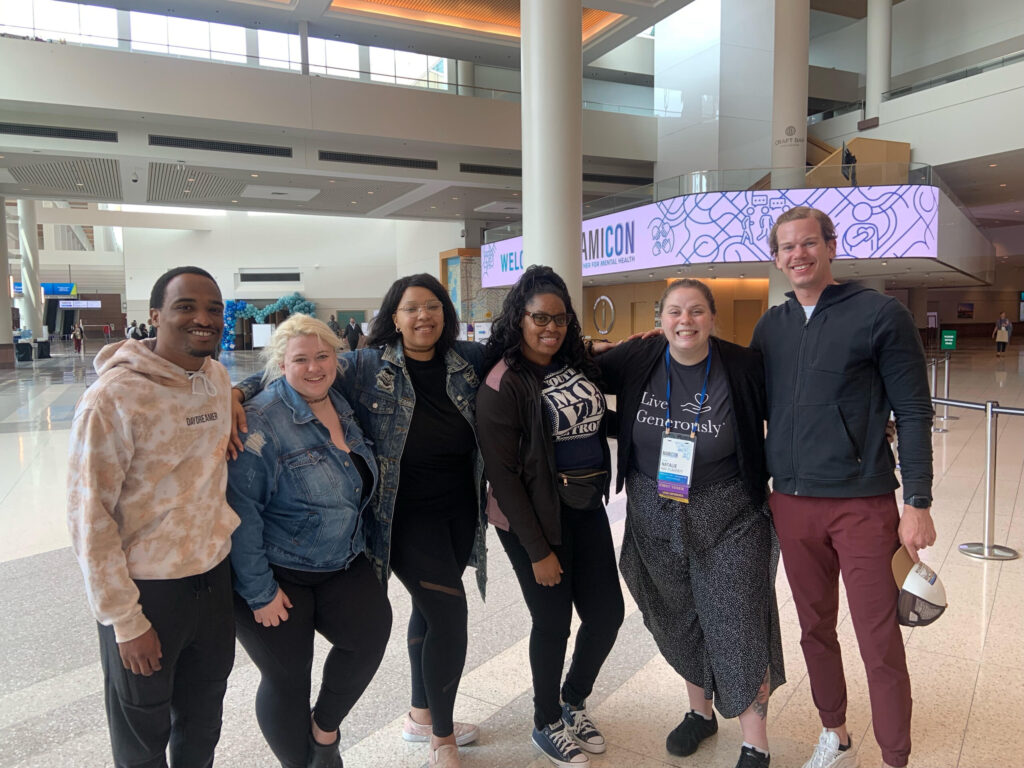
The meaningful engagement, representation, and leadership of youth and young adults with direct lived and living experiences in community and systems transformation.
Direct personal experience navigating human serving systems receiving services as a child, youth, or young adult (including but not limited to mental health, child welfare, juvenile justice, and/or special education) and/or currently or formerly living with trauma, a disability, or a mental health/substance use diagnosis.
Certification, Accreditation, and Implementation Support Pathways
Whether you’re an individual beginning your journey in youth peer support, a supervisor supporting lived experience roles, or an organization/state seeking to strengthen or expand youth peer support services, Peer Connect is designed to meet you where you are. Choose the pathway that’s right for you!
Certification
National Youth Peer Support Specialist Certification
A Peer Connect Certified Youth Peer Support Specialist (PCCYPS) is a young adult or near-peer under the age of 30 who draws on their lived experiences to build meaningful, trusting relationships with youth and young adults navigating similar experiences, systems, or life transitions. Grounded in shared experience, mutuality, and the understanding that young people are experts in their own lives, they partner alongside youth as they identify their goals, strengthen their self-advocacy, connect with resources, build relationships, and define what healing and support mean for them.
Participants complete an interactive, facilitator-led training experience designed specifically for youth and young adults and the unique developmental, relational, and systemic contexts in which youth peer support occurs.
PCCYPSs are prepared to:
- Build authentic, trusting relationships with their peers
- Share lived experience intentionally and appropriately
- Support youth voice, choice, and self-determination
- Support youth navigating complex systems and accessing community resources
- Promote affirming connection, hope, and belonging
- Partner with families, communities, and service systems while honoring the unique role of peer support
Certification demonstrates successful completion of nationally recognized training while preparing participants to contribute meaningfully within community organizations, behavioral health settings, schools, youth-serving systems, and youth-led initiatives.
General Eligibility
- Be age 29 or younger at the time of certification
- Possess lived or living experience that informs their youth peer support practice
- Demonstrate a commitment to supporting other young people through mutual relationships grounded in shared experience
- Deep understanding of the system(s) in which they work—barriers, challenges, opportunities/resources—while adhering to organizational standards and requirements (especially when it comes to crisis response, trauma, abuse/maltreatment, and safety considerations)
- Complete all required training and assessment components
Certification Includes
- 40 hours of facilitator-led learning
- Interactive practice activities and experiential learning
- Training materials and resources
- Assessment and certification process
- National Peer Connect Certificate
- Access to continued learning and networking opportunities
- Additional training and technical assistance, as needed
National Youth Peer Support Supervisor Certification
A Peer Connect Certified Youth Peer Support Supervisor (PCCYPS-S) offers direct, ongoing support and leadership, grounded in the unique administrative, cultural, and systemic nuances of overseeing youth peer roles. Supporting this workforce requires dedicated, specialized supervision that differs from traditional clinical oversight. Certified supervisors are trained to protect the integrity of the role, implement co-reflective supervision practices specific to young adults with lived experiences, and cultivate a welcoming, trauma-informed, and collaborative workplace culture.
Our national certification is tailored for direct supervisors, with benefits for program coordinators, directors, and clinical staff overseeing youth peer support programs. Achieving this certification validates leadership’s ability to maintain consistency in quality, intentional preparation, and fidelity to youth peer support values.
PCCYPS-S are prepared to:
- Understand the foundations and values of youth peer support
- Support the intentional practice of strategic sharing
- Maintain role clarity across multidisciplinary teams, within organizations, and systems at-large
- Provide ongoing, co-reflective, trauma-informed supervision and guidance
- Support professional growth and role sustainability
- Recognize and address organizational barriers that impact youth peer support staff
- Ensure youth peer support staff have access to additional support and resources as needed
Certification Includes
- 20 hours of facilitator-led learning
- Interactive practice activities and experiential learning
- Training materials and resources
- Assessment and certification process
- National Peer Connect Certificate
- Access to continued learning and networking opportunities. Additional training and technical assistance, as needed
Agency/State Accreditation
Our Peer Connect accreditation consulting packages can be tailored to your specific needs, including a crosswalk and adaptation of curriculum to meet your state’s Medicaid billing requirements and other legal compliance and accreditation standards, such as continuing education requirements.
Train-the-Trainer (TtT) Pathway
YMN trains your staff to become local Peer Connect PCCYPS or PCCYPS Supervisor core training facilitators. Graduates are fully eligible to train new youth peer supports and supervisors and to facilitate the 90-minute continuing education sessions locally.
Legacy Pathway
YMN equips and authorizes your team to train the entire, comprehensive Peer Connect package. Your team becomes fully prepared to train new youth peer support specialists, their supervisors, and new Peer Connect trainers, ensuring long-term systemic sustainability beyond direct, ongoing YMN involvement.
Implementation Support
Strong youth peer support programs also require shared understanding and readiness across teams and organizations. Through our Peer Connect program, we also offer organizational implementation support, supporting larger teams, agencies and systems in developing the policies, structures, and practices needed for sustainable youth peer support services.
Organizations implementing Peer Connect strengthen their ability to:
- Integrate youth peer support into existing teams, agencies, and systems
- Create shared expectations and mutuality across teams
- Support collaboration between youth peer support and other staff
- Reduce role confusion and strain
- Sustain youth peer support programs over time
Peer Connect Continuing Education
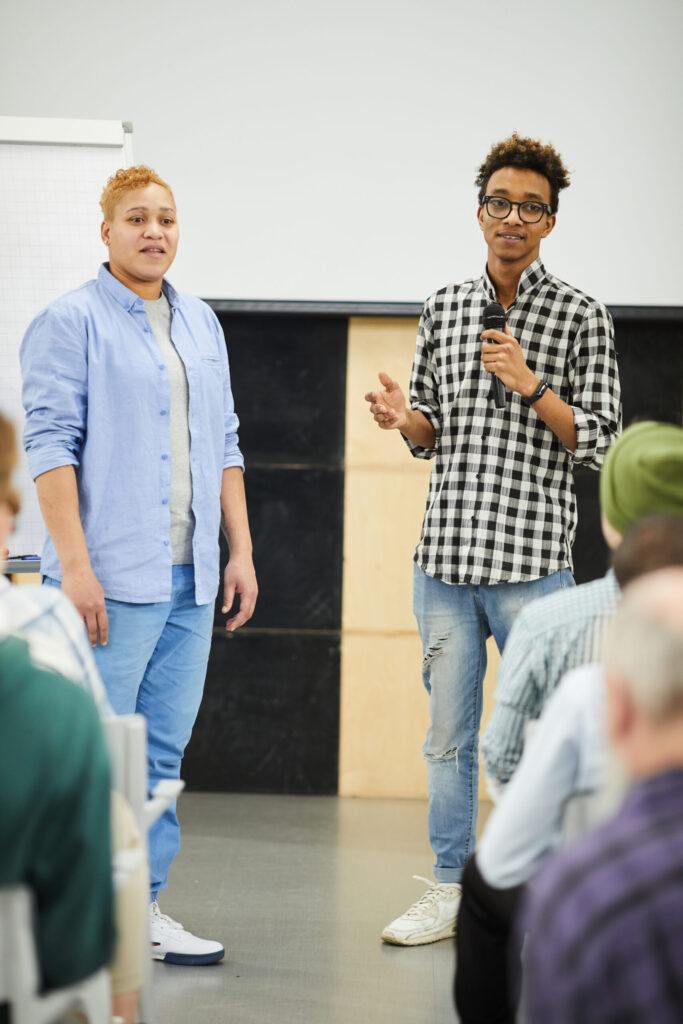
Intentional networking and building of a youth peer support community for specialists through 90-minute facilitated co-reflection and professional development spaces. These offerings are intended for cohorts who have completed their core training, ensuring youth peer support specialists feel supported, connected, and guided both with their peers and with trained facilitators beyond core program completion.
Join our National Youth Peer Support Continued Learning & Connection Series!
These are *free* monthly virtual spaces for those working in a youth peer support role to stay connected, reflect together, and continue building community beyond their core training experiences!
These sessions are open to anyone under the age of 30 who is actively working in a youth peer support role and has completed any youth peer support training curriculum!*
*This includes, but is not exclusive to, our Youth MOVE National Peer Connect Program
Sessions take place on the third Tuesday of each month from 5:00–6:30 PM ET – please be sure to check the correct time where you live! – with a rhythm of two co-reflection sessions followed by one co-learning session each quarter.
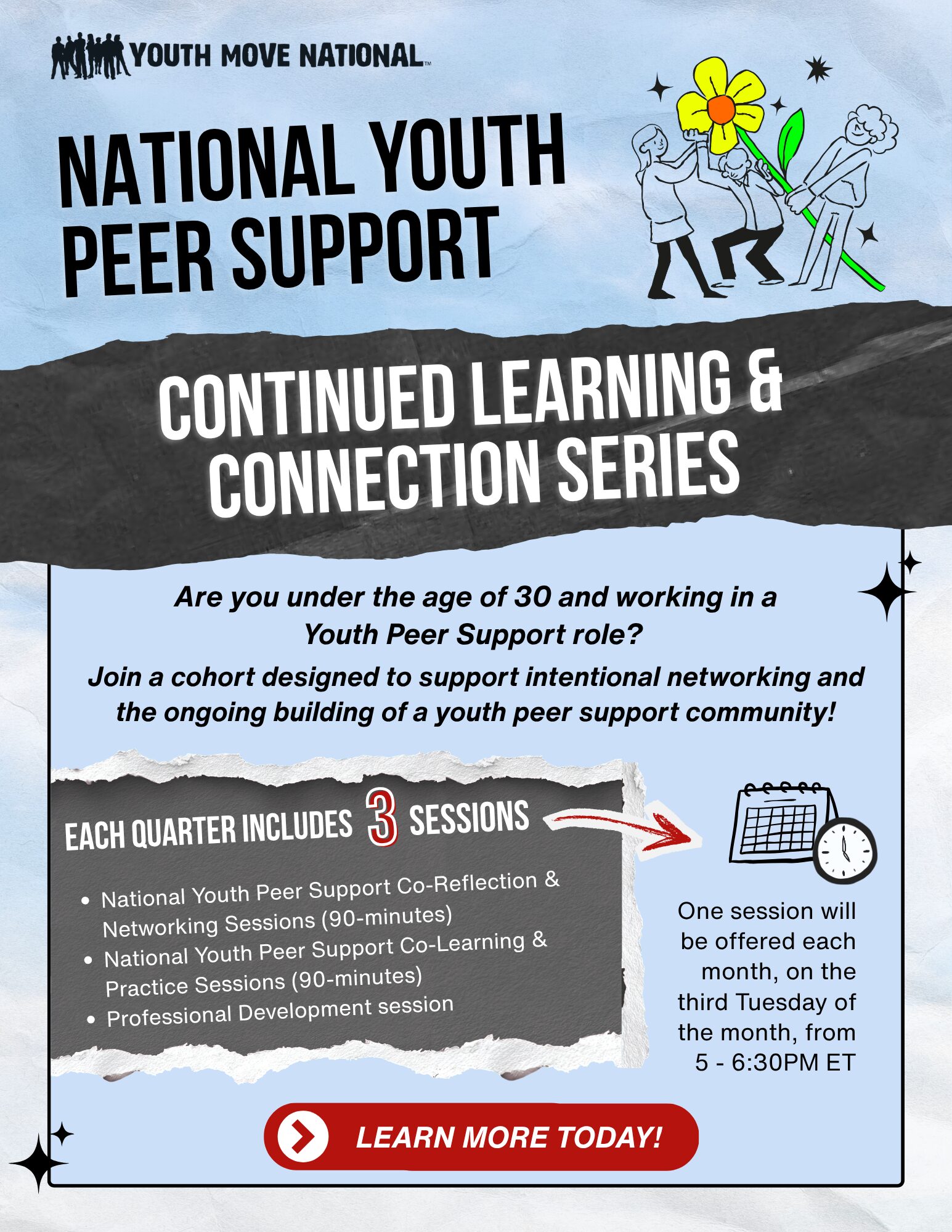
National Youth Peer Support Co-Reflection & Networking Sessions (90 minutes)
Designed to support connection, shared learning, and community among those practicing youth peer support, these sessions are discussion-centered and grounded in co-reflection, offering space for participants to process experiences, explore challenges, share strategies, and learn from one another in real time. Co-reflection spaces also offer an opportunity to network with others working in the field across the country (and even beyond!) and inform future professional development topics, ensuring that learning opportunities stay responsive to the realities of youth peer support work.
National Youth Peer Support Co-Learning & Practice Sessions (90 minutes)
Designed for those working in youth peer support roles as focused learning and skill-building opportunities, these sessions build on foundational peer support frameworks and introduce new topics as needs emerge through Co-Reflection & Networking spaces. Each session is shaped by the real-time experiences and priorities identified by participants, with an emphasis on strengthening skills, deepening understanding of the role, and supporting ongoing growth in practice. Together, these sessions support continuous learning, shared accountability, and quality improvement across youth peer support work, while remaining grounded in youth voice, lived and living experience, and fidelity to peer support values.
Section 6: Detailed Accreditation Consulting Packages
Section 7: Fidelity, Program Evaluation, and Continuous Quality Improvement
Youth MOVE National (YMN) prioritizes program evaluation with two key goals: (1) Continuous Quality Improvement (CQI), which provides feedback and suggestions for improvement, allowing course correction in real time and performance assessment, and (2) tracking key performance indicators, outcomes, and impacts of the Peer Connect curriculum delivery. Data is gathered through various methods, such as training registration, knowledge assessment(s), pre- and post-training surveys through Qualtrics, QuestionPro, Google Forms, and Zoom polls, testing knowledge gained, skills learned, confidence in the material presented, and training satisfaction, as well as personal and community impact, and the likelihood of a recommendation to others. Optional demographic questions are included in training and event registration to identify and address disparities and inequities in research and recruitment.
YMN utilizes the Plan-Do-Study-Act (PDSA) cycle to test small changes, implement effective adjustments, and ensure continuous improvement throughout the initiative. At every step of the process, CQI methods are embedded throughout the Peer Connect Training experience, with data collection and analysis that inform decision-making and course correction, as needed. By assessing the effectiveness of our efforts, we ensure that our initiative meets the needs of our participants and contributes to positive outcomes, enabling us to make data-informed decisions, strengthen our impact and theirs, and continuously improve the quality of our connections to youth peer supporters, supervisors, and their communities.
YMN maintains the fidelity of the Peer Connect Training Program through a comprehensive quality assurance and CQI process that supports consistent, high-quality implementation across facilitators, training cohorts, and implementation sites. YMN provides structured guidance, standardized practices, and ongoing coaching to promote facilitator preparedness, consistent curriculum delivery, learner engagement, and adherence to the core principles and best practices of youth peer support. Throughout the training process, facilitators engage in reflective practice, observation, coaching, and performance feedback to strengthen facilitation skills and ensure the curriculum is delivered as designed. Following each training, YMN collects learner and facilitator feedback, assesses knowledge and skill development, and uses these data to inform curriculum enhancements, facilitator professional development, and CQI of training methods and delivery. Fidelity monitoring protects the integrity of the curriculum by ensuring that core content, instructional methods, and youth peer support values are implemented consistently while allowing facilitators the flexibility to adapt examples and discussions to meet local, cultural, and community needs without compromising the program’s core components. This structured fidelity process supports planning, implementation, and course correction; strengthens evaluation by ensuring participant outcomes are measured against a consistently delivered intervention; and provides confidence that positive outcomes are attributable to the Peer Connect model rather than differences in implementation.
Section 8: Accreditation Oversight and Governance
Youth MOVE National maintains accreditation oversight and governance through a structured, transparent process designed to ensure quality, consistency, and accountability in training implementation, state accreditation, and youth peer support specialist and supervisor certification. As the governing body of the organization, YMN’s Board of Directors provides oversight and accountability to ensure accreditation and certification efforts remain aligned with YMN’s youth-led mission and values. At least 60% of YMN’s Board of Directors, including the Board President, must be youth and young adults with lived experience as outlined in YMN’s bylaws, with current representation exceeding 92%. This commitment to youth leadership extends throughout the organization, where youth and young adults serve as executive leaders, staff, trainers, consultants, chapter leaders, and decision-makers.
YMN works in partnership with the Youth Best Practice Committee (YBPC) and an independent advisory body comprised of multidisciplinary experts in youth peer support, workforce development, behavioral health, evaluation, research, and systems transformation to guide standards, policies, and continuous quality improvement (CQI) efforts. This governance structure ensures accreditation and certification decisions are informed by diverse expertise, youth voice, and field-based best practices while minimizing conflicts of interest through independent review and oversight. YBPC advises the field on best-practice approaches to engaging youth in systems transformation through meaningful planning, design, implementation, and evaluation of programs serving young people. With a robust, culturally diverse membership representing youth and young adults with lived experience across a spectrum of youth-serving systems, as well as researchers, evaluators, and advocates, YBPC members help define quality youth-driven partnerships, establish best-practice standards, and identify meaningful outcomes for individuals, organizations, and systems implementing youth peer support programming. Together, YMN, YBPC, the Board of Directors, and the independent oversight body ensure Peer Connect accreditation and certification remain rigorous, equitable, youth-centered, and responsive to the evolving needs of the youth peer support workforce.
- The National Youth Peer Support Coalition (along with Mental Health America and others)
- The Peer Support National Advisory Council (intergenerational coalition of organizations and national leaders from the field)
- The People Organized for Wellness, Empowerment, and Recovery Coalition (intergenerational coalition of organizations and national leaders from the field)
